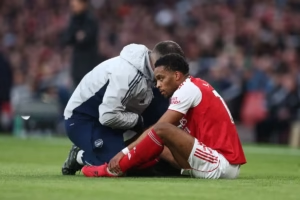
In-depth analysis with player focus, stats, and transfer window outlook
Walk through the Emirates Stadium on a match day, and you’ll feel it immediately: the energy, the belief, the sense that Arsenal are back where they belong. Mikel Arteta has overseen one of the most remarkable rebuilds in recent Premier League history, transforming a side that had lost its way into genuine title contenders and one of Europe’s most thrilling teams to watch.
Their brand of football is everything fans dreamed of when Arteta took charge fast, fierce, and full of fight. With high pressing that suffocates opponents, lightning-quick transitions that cut defenses apart, and constant off-ball movement that creates space where none seems to exist, Arsenal have become a force to be reckoned with. Last season, they pushed Manchester City all the way in the title race, finishing just five points behind the champions. This term, they’re once again in the mix at the top of the table, but a familiar problem is threatening to derail their progress.
THE NUMBERS DON’T LIE – ARSENAL’S INJURY CRISIS IN BLACK AND WHITE
According to data from Premier League Injury Records, Arsenal have recorded 42 separate injury absences this season so far the third-highest total in the league, behind only Aston Villa and Chelsea. Of these, 27 have been muscle-related injuries strains, pulls, and stress issues that are closely linked to workload and fatigue.
To put this in perspective:
– Manchester City have had just 29 injury absences, with only 15 muscle-related
– Liverpool have recorded 31 absences, 18 of which are muscle injuries
– Last season, Arsenal lost a combined 1,247 days to injury – more than double City’s total of 589 days
– Key players Bukayo Saka, Martin Ødegaard, and William Saliba have missed a combined 21 matches this season
These numbers tell a clear story: while Arteta’s approach delivers results on the pitch, it’s taking a significant toll on his players’ bodies.
INTENSITY HAS A PRICE – AND KEY PLAYERS ARE PAYING IT
Arteta’s system is built on maximum effort from every single player on the pitch, from the goalkeeper to the front line. There is no room for passengers; every position requires constant running, sharp changes of direction, and physical commitment that pushes athletes to their absolute limits.
Let’s look at what this means for some of Arsenal’s most important players:
BUKAYO SAKA
The England winger has started 32 of Arsenal’s 36 games across all competitions this season, playing over 2,700 minutes more than any other outfield player in the squad. His high-energy style sees him cover an average of 11.8 kilometers per match, with over 20 high-intensity sprints per game. Unsurprisingly, he’s already missed three matches this season with hamstring and thigh strains, and has been forced to play through discomfort in several others.
MARTIN ØDEGAARD
The captain has been ever-present in the Premier League, starting all 30 games so far. As the team’s creative hub, he’s not just running to press – he’s constantly moving to receive passes, create angles, and drive forward with the ball. His average of 11.5 kilometers per match includes significant time spent in high-intensity activity, and he’s already had one spell on the sidelines with a groin injury this season.
WILLIAM SALIBA
The French defender has been a revelation since returning from loan, but his physical style of play combined with the constant running required to step out of defense and press – has led to two separate hamstring injuries this season, keeping him out for a total of 10 matches. At just 22 years old, there are concerns that overloading him now could lead to long-term issues that affect his career.
This isn’t just a match-day demand either training sessions are designed to replicate the intensity of games, ensuring players can maintain the required levels week after week. While this approach has clearly paid dividends on the pitch, it’s also taking a heavy toll.
HOW OTHER TOP MANAGERS GET IT RIGHT
Arsenal aren’t the only team playing high-intensity football – but other top clubs have found ways to keep their players fit while maintaining performance levels.
PEP GUARDIOLA (MANCHESTER CITY)
Guardiola’s approach is built on rotation and squad depth. He uses a “positionless football” system that allows multiple players to cover the same roles, meaning he can change his team without disrupting the style of play. This season, he’s given minutes to 24 different players in the Premier League, with no single outfield player starting more than 25 games. He also adjusts training intensity throughout the week, with lighter sessions before big matches and focused recovery work after games.
JÜRGEN KLOPP (LIVERPOOL)
Klopp’s “heavy metal football” is similarly intense, but he’s adapted his approach in recent years. He works closely with fitness staff to monitor player loads, uses data to predict injury risks, and isn’t afraid to rest key players even in important matches. This season, he’s rotated his front three regularly, and has reduced the number of high-intensity training sessions during busy periods.
CARLO ANCELOTTI (REAL MADRID)
Ancelotti focuses on experience and managing player workloads based on age and fitness levels. He gives older players like Luka Modrić and Karim Benzema regular rest days, uses younger players to cover in less important games, and prioritizes recovery over training volume during congested fixture periods. Real Madrid have one of the lowest injury rates in Europe despite playing over 50 games per season.
All three managers have proven that you can play attacking, intense football while keeping your squad healthy – it just requires smart management and a willingness to adapt.
ROTATION IS THE MISSING PIECE IN ARTETA’S PUZZLE
Arteta has shown signs of learning – he rotated more during the busy Christmas period this season, and gave minutes to academy graduates like Ethan Nwaneri in the Carabao Cup. But there’s still a long way to go.
City’s depth means they can afford to give key stars time off without losing quality on the pitch something Arsenal have struggled to replicate. Arteta has often relied too heavily on a core group of around 12-14 players. When these players are forced to push through the pain barrier, it’s only a matter of time before they pick up more serious injuries that keep them out for weeks or even months.
And when those key stars do go down, the gaps in Arsenal’s squad depth become painfully clear. Positions like central midfield where Thomas Partey’s injuries have left the team short – and left-back have been particularly problematic, with fringe players often looking ill-equipped to step up and maintain the team’s high standards. This creates a vicious cycle – Arteta is reluctant to rotate because he doesn’t trust his backups, leading to more injuries to his first-choice players, which then forces him to use those same backups in high-pressure situations where they’re less likely to perform.
SUMMER TRANSFER WINDOW – WHERE ARSENAL MUST STRENGTHEN
The upcoming transfer window presents Arsenal with a perfect opportunity to address their depth issues and reduce the burden on key players. Here are the positions that need priority:
1. BACKUP CENTRAL DEFENDER
William Saliba and Gabriel Magalhães have formed an excellent partnership, but there’s no quality cover behind them. Rob Holding has struggled to adapt to Arteta’s system, while Jakub Kiwior is still learning. Signing an experienced central defender who can step straight into the team would allow Arteta to rest his first-choice pair regularly, reducing injury risks.
2. VERSATILE CENTRAL MIDFIELDER
Declan Rice and Kai Havertz have been solid, but Thomas Partey’s injury record means Arsenal need reliable cover. A midfielder who can play both defensive and box-to-box roles would give Arteta more options to rotate, and would allow him to rest Rice – who has already played over 2,500 minutes this season without weakening the team.
3. BACKUP WINGER
Bukayo Saka and Gabriel Martinelli have been outstanding, but they’ve had almost no rest this season. Reiss Nelson has shown promise but has struggled with injuries, while Fabio Vieira is more suited to central roles. Signing a pacey winger who can play on either flank would allow Arteta to give his star wide men regular breaks, and would add new dimensions to the attack.
4. DEPTH AT LEFT-BACK
Kieran Tierney has been plagued by injuries, and while Oleksandr Zinchenko has impressed in the role, he’s also been missing with knocks this season. Having a dedicated backup left-back who can cover both defensive and attacking duties would reduce the strain on Zinchenko, who is also often used in midfield.
IT DOESN’T HAVE TO BE THIS WAY – ADAPTATION IS THE KEY
Crucially, none of this means Arteta needs to abandon the tactical philosophy that has brought Arsenal back to the top. Their style of play is their identity, and it’s proven that it can compete with the best in the world. What Arteta does need to do is adapt how he implements that philosophy, balancing ambition with sustainability.
Here’s what needs to change:
ROTATE MORE AND TRUST THE SQUAD
Arteta needs to be bolder about giving playing time to fringe stars and academy talent. Even small changes – resting a key player for a League Cup tie or rotating two midfielders in a less high-stakes Premier League game – can make a huge difference to long-term fitness.
SUB SMARTER DON’T WAIT FOR DISASTER TO STRIKE
By taking stars off earlier – particularly in games where Arsenal are already in control – he can reduce the risk of late-game injuries caused by fatigue. This also gives substitutes valuable minutes to build match sharpness.
MANAGE LOADS WORK WITH THE EXPERTS
Arteta needs to work more closely with medical and fitness staff to monitor player exertion levels. Using data to adjust training programs and team selection can help prevent injuries before they happen – from lighter training sessions before big games to specialized recovery plans.
PLAN FOR FIXTURE CONGESTION
With Arsenal competing in the Champions League again next season, fixture congestion will be even worse. Arteta needs to create clear plans for rotating the squad across competitions, prioritizing key games while still fielding competitive teams in others.
THE BOTTOM LINE – SUSTAINABILITY IS AS IMPORTANT AS STYLE
Arteta has done incredible work rebuilding Arsenal from the ground up. He’s restored pride to the club, brought through a new generation of talented players, and created a style of football that excites fans and terrifies opponents. But if the goal is to turn this progress into tangible silverware to win the Premier League or compete for the Champions League then keeping the team fit and healthy is just as important as having the right tactics.
You can’t win trophies with your best players sitting in the treatment room. You can’t maintain momentum when key stars are missing for weeks at a time. And you can’t build a dynasty if your approach to the game leaves your squad broken and exhausted by March.
The style is right. The ambition is there. Now Mikel Arteta needs to make sure his team can keep playing the football that defines them all season long. Because if he doesn’t adapt, Arsenal’s injury woes could be the difference between glory and disappointment once again.
Leave a Reply